
Building a Data Center in Western Pennsylvania? Plan the Grounds Before the Facility Goes Live
The servers are installed. The security systems are active. The backup power has been tested. The facility is preparing to go live. Outside, however, disturbed soil is washing toward a drainage inlet. Temporary seed has not established on the slopes. Construction traffic has left the access road uneven. Brush is beginning to grow along the perimeter fence. The retention pond contains sediment from the final months of site work. The building may be operational, but the property is not finished.
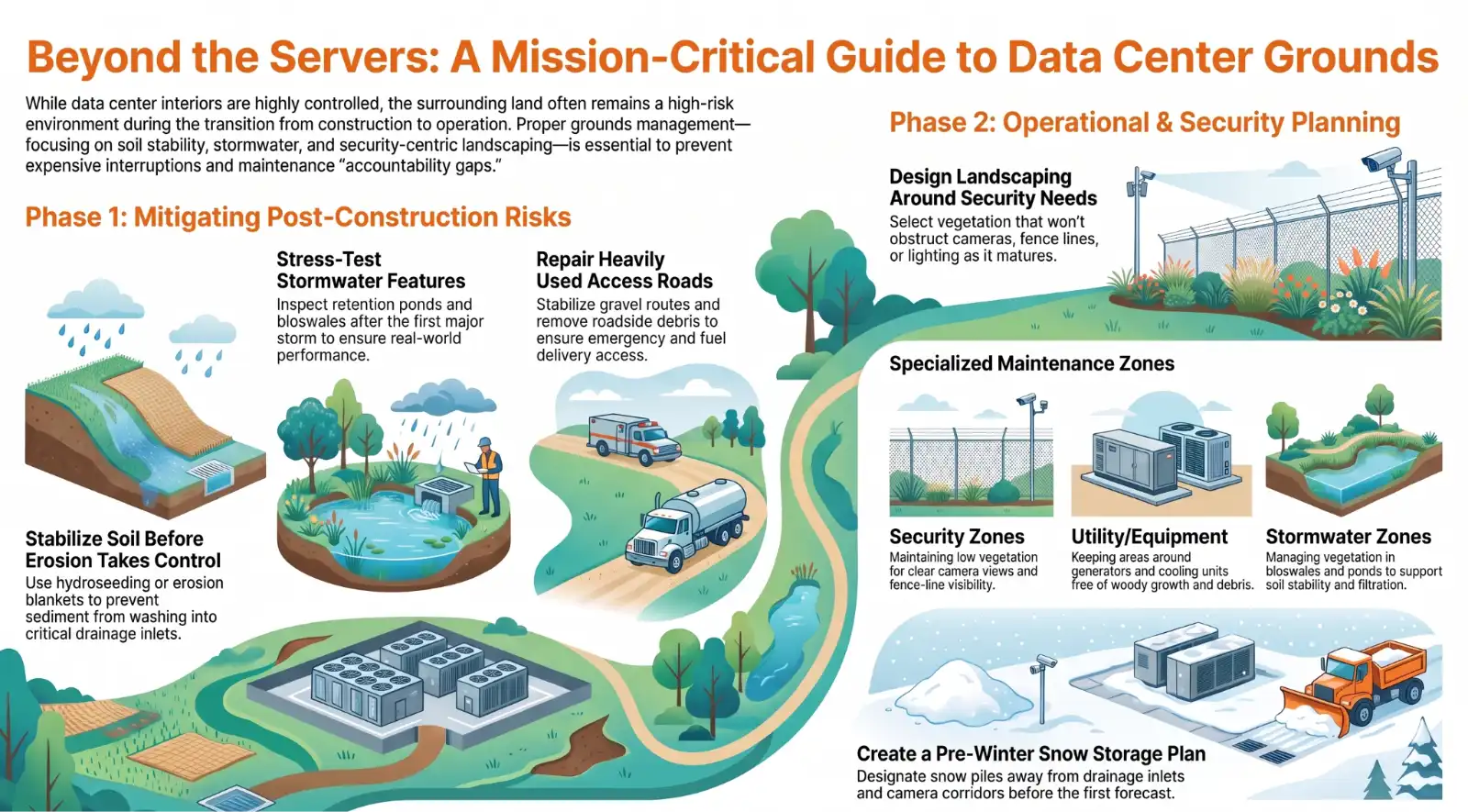
Data center developers and operators invest heavily in systems that prevent interruptions inside the facility. The same level of planning should apply to the land surrounding it. Drainage, vegetation, slopes, stormwater features, access roads, and winter conditions all affect how reliably the site operates. When those areas are addressed only after construction ends, small exterior problems can become expensive operational issues.
Growing Seasons Landscaping supports data center developments and mission-critical facilities across Pittsburgh and Western Pennsylvania with landscape installation, site stabilization, vegetation management, stormwater maintenance, and year-round grounds care. The best time to build that program is before the facility goes live.
→ Learn more about our industrial & large-acreage services
Construction Disturbance Does Not End at Commissioning
Large data center developments reshape the land around them. Construction may involve clearing vegetation, grading slopes, installing utility corridors, building equipment pads, creating access roads, and developing stormwater systems. Even when the work meets the approved plans, the property continues to change after the major contractors leave.
Freshly graded soil settles. Seed washes out. Temporary access routes deteriorate. Runoff follows new paths after the first heavy storms. Construction debris collects in drainage systems. Invasive plants establish quickly in disturbed areas. These conditions require active management during the transition from construction site to operating facility.
A data center grounds contractor should be involved early enough to understand:
- The final grading plan
- Stormwater flow paths
- Erosion-prone areas
- Permanent and temporary access routes
- Security requirements
- Snow storage locations
- Utility and equipment clearances
- Long-term mowing and vegetation zones
Without that coordination, the maintenance team inherits a site it did not help plan and a list of problems that were not addressed during construction.
Eight Areas to Address Before the Facility Goes Live
Stabilize Disturbed Soil Before Erosion Takes Control
Disturbed soil is one of the most immediate risks on a newly developed property. Until vegetation is established, heavy rain can move soil into roads, drainage structures, retention ponds, and neighboring areas. On steep grades, erosion can form channels that grow deeper with every storm.
A site stabilization plan may include:
- Hydroseeding
- Straw matting
- Erosion-control blankets
- Slope stabilization
- Topsoil preparation
- Native vegetation establishment
- Compost filter socks
- Sediment control
- Repair of washed-out areas
The first application is not always the final solution. Seed may fail because of poor soil, rainfall timing, heat, compaction, or continued construction traffic. A contractor should inspect the results and repair areas that do not establish properly. Waiting until erosion is visible from the road usually means the repair will require more labor, material, and equipment.
GSL supports large industrial sites with hydroseeding, erosion control, runoff mitigation, reclamation, and slope stabilization. These services help developers move from temporary construction controls to a stable, maintainable property.
Confirm That Stormwater Features Work Under Real Conditions
Stormwater systems are designed using plans, calculations, and expected flow patterns. The first major storms reveal how the site actually performs. Water may collect along a road edge. Sediment may enter a basin faster than expected. An inlet may clog with construction debris. A newly seeded swale may erode before vegetation becomes established.
Before the facility becomes fully operational, the property team should inspect:
- Retention and detention ponds
- Inlet and outlet structures
- Bioswales
- Culverts
- Drainage channels
- Emergency spillways
- Rain gardens
- Slopes leading toward stormwater features
- Low areas near access roads and equipment zones
A retention pond that looks acceptable from a distance may already contain sediment left by construction. A drainage inlet may appear open while accumulated debris restricts flow below the grate. These features should be cleaned, documented, and placed on a recurring maintenance schedule before responsibility transfers fully to the operating team.
GSL maintains retention ponds, drainage areas, bioswales, slopes, and vegetation around stormwater systems. That helps data center operators preserve both site function and environmental compliance.
Design Landscaping Around Security, Not Just Appearance
Traditional commercial landscaping often emphasizes entrances, signs, and decorative planting beds. A data center requires a different set of priorities.
Planting and vegetation should support:
- Clear camera views
- Visible fence lines
- Controlled access points
- Inspection routes
- Lighting coverage
- Emergency response
- Utility access
- Predictable long-term growth
A shrub that looks appropriate at installation may block a camera or access panel after several years of growth. A tree planted too close to a fence can create maintenance and security problems as it matures. Before plants are installed, the landscape plan should be reviewed with operations and security teams.
Questions should include: How tall will this plant become? Will it interfere with a camera or light? Does it create a concealed area? Will roots affect pavement or underground infrastructure? Can crews maintain it without entering a restricted zone? Will fallen leaves or branches affect nearby drainage?
Low-maintenance planting does not mean no planning. It means choosing vegetation that performs its intended function without creating unnecessary work or risk.
Define Permanent Vegetation Management Zones
Large data center properties may include several different maintenance environments. The entrance may require detailed commercial landscape care. The secure perimeter may need controlled vegetation for visibility. Remote areas may require seasonal mowing. Slopes may need specialized equipment. Stormwater features need selective vegetation management rather than standard turf mowing. These areas should not be maintained using one blanket approach.
A site plan should identify:
- High-Visibility Zones — Entrances, administrative areas, parking lots, and visitor-facing spaces that require frequent mowing, edging, pruning, and cleanup.
- Security Zones — Fence lines, gates, camera corridors, and inspection routes where vegetation must remain low and controlled.
- Utility and Equipment Zones — Areas around generators, transformers, cooling equipment, and access pads that must remain free of debris and woody growth.
- Stormwater Zones — Retention ponds, swales, and drainage features where vegetation supports soil stability and filtration.
- Low-Use or Naturalized Zones — Areas that may require less frequent mowing, invasive-species management, or native vegetation rather than weekly maintenance.
- Slopes and Remote Areas — Terrain requiring slope mowers, specialized equipment, or a different service schedule.
Defining these zones before the first maintenance contract is written creates a more accurate scope and budget. It also prevents crews from over-maintaining natural areas or neglecting operationally important ones.
Finish Access Roads for Long-Term Use
Construction vehicles can be hard on temporary and permanent access routes. Heavy trucks create ruts. Runoff moves gravel. Road edges erode. Sediment fills drainage channels. Areas that supported construction traffic may not be ready for daily facility use without final repairs.
Before commissioning, inspect all routes used by employees, equipment vendors, emergency responders, fuel deliveries, maintenance teams, snow-removal equipment, and security personnel.
Gravel roads should be graded and stabilized. Drainage should direct water away from travel surfaces. Overhanging branches and roadside vegetation should be removed. The site should also establish responsibility for future repairs. A small rut can become a washout when water repeatedly follows the same path. Proactive grading and drainage work reduce the likelihood of an emergency access repair later.
GSL provides gravel road maintenance, excavation support, drainage work, erosion repair, and vegetation management for industrial properties.
Create the Snow Plan Before the First Forecast
Snow planning should begin while the site is still being developed. Data centers do not close for winter weather. Access must remain available for employees, vendors, emergency personnel, fuel deliveries, and critical maintenance.
The snow and ice management plan should identify priority roads, emergency access points, employee and visitor parking, loading and delivery areas, generator and utility access, security gates, walkways, deicing priorities, snow storage locations, and areas where piled snow could block cameras or drainage.
Snow storage deserves particular attention. A pile placed near a drainage inlet may create flooding when it melts. A pile along a fence may reduce visibility. A pile near equipment can restrict maintenance access for weeks.
The snow contractor should walk the site before winter, document priorities, and coordinate with facility operations and security. The plan should also account for construction phases. If the facility goes live while other sections of the campus remain under development, routes and storage areas may change during the season.
Establish Contractor Access and Communication Procedures
A data center grounds contractor needs more than a schedule. The company must understand how to enter, move through, and report activity on a controlled site.
Before service begins, determine which employees need credentials, whether crews require escorts, which gates contractors should use, where equipment can be stored, which areas are restricted, how daily service is documented, who receives incident reports, who approves additional work, and how urgent conditions are communicated.
The account manager should know the property and the client’s expectations. Crews should receive clear site-specific instructions before they arrive. Frequent turnover creates problems at high-security facilities. Each new person may require onboarding, credentialing, and additional supervision.
Ask potential contractors how they train employees, manage access, maintain crew consistency, and communicate changes.
GSL works on restricted industrial sites and maintains safety compliance through ISN Networld, Veriforce, and Safeland. Our teams understand that contractor conduct, documentation, and communication are essential parts of serving a mission-critical property.
Veriforce
Safeland
Build the Maintenance Scope Before Construction Teams Leave
The transition from development to operations creates an accountability gap.
The facility team is left trying to determine who owns the problem. Before final turnover, bring the development, construction, facility, and grounds teams together for a site walk.
Document:
- Areas that still require stabilization
- Failed or incomplete plantings
- Sediment in stormwater systems
- Drainage concerns
- Damaged roads
- Incomplete restoration
- Temporary controls that must be removed
- Areas included in warranties
- Long-term maintenance responsibilities
Photographs and written notes create a clear record of the site’s condition. The maintenance agreement should then define exactly what begins after turnover and what remains the responsibility of the construction team. This avoids paying a maintenance contractor to correct incomplete installation work and prevents legitimate maintenance needs from being dismissed as construction issues.
The First-Year Maintenance Plan
The first year of operation may require more attention than future years. Newly planted trees and shrubs need monitoring. Seeded areas may require repairs. Slopes continue to settle. Stormwater systems collect leftover construction sediment. Invasive vegetation can establish in disturbed areas.
A first-year plan should include:
- Frequent inspections of newly stabilized areas
- Reseeding and erosion repairs
- Monitoring of new plant material
- Stormwater inspections after heavy rain
- Vegetation control along security perimeters
- Road and drainage repairs
- Seasonal cleanup
- Snow and ice management
- Documentation of recurring issues
After the site stabilizes, the maintenance scope can be adjusted based on actual conditions. The objective is not to over-service the property. It is to give new systems, vegetation, and site improvements enough support to perform as intended.
Choose a Partner Built for Industrial-Scale Properties
A data center development requires a landscaping contractor that can work beyond the front planting beds. The company must be prepared to support large acreage, industrial access requirements, stormwater systems, slopes, security zones, disturbed soil, and year-round operations.
Growing Seasons Landscaping serves commercial and industrial properties throughout Western Pennsylvania, Eastern Ohio, and West Virginia.
Our data center and industrial services include:
- Landscape installation
- Hydroseeding
- Erosion control
- Slope stabilization
- Site reclamation
- Vegetation management
- Retention pond maintenance
- Drainage services
- Gravel road maintenance
- Specialized mowing
- Snow and ice management
- Year-round commercial grounds maintenance
GSL is locally owned and operated, giving facility teams direct access to local leadership and a dedicated Account Manager.
Prepare the Property Before the Facility Goes Live
Commissioning should not be the first time your team begins thinking about long-term grounds maintenance. The earlier you plan for drainage, erosion, vegetation, access, security, and snow, the easier the property will be to operate after construction.
Growing Seasons Landscaping helps developers, general contractors, operators, and facility managers move data center properties from active construction to stable, year-round operation.
Schedule an Exploratory Call
Discuss your development timeline, site conditions, and post-construction maintenance needs with a GSL Solutions Specialist. Claim your free copy of The Complete Solution for Managing Your Property Asset and start building a plan for the property surrounding your facility.
(412) 310-4554
Visit gslpgh.com/contact to get started