
Overgrowth Costs Energy Before It Costs You a Fine
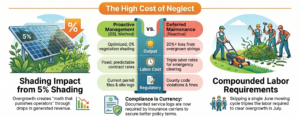
A solar panel shaded by 5% of its surface can lose 20% or more of its output. That math punishes operators who treat vegetation management as an afterthought.
Output loss from just 5% panel shading
Labor cost of emergency vs. scheduled mowing
Western PA active growing season
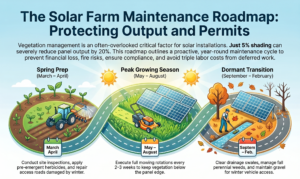
Grass and weeds grow into the panel line. Output drops. Revenue drops. Then the county inspector shows up and adds a code violation to the invoice. Western PA’s growing season runs aggressive from April through October. A solar farm that skips a mowing cycle in June will spend triple the labor clearing overgrowth in July. Prevention costs less than correction on every site GSL has managed.
A Month-by-Month Calendar for Western PA Solar Sites
Peak Season
→ See our full solar farm services
Equipment That Fits Under the Panels
Standard commercial mowers do not clear the racking height on most utility-scale arrays. GSL operates low-profile mowing equipment designed for panel clearance.
- Operators train on navigating narrow row spacing without contacting racking systems, conduit, or wiring
- Remote areas where equipment cannot reach get herbicide treatment or string trimming
- Inverter pads, transformer stations, and fence line transitions get hand-clearing on every rotation
- Tight spots are built into every site plan — not skipped because the machines don’t fit
Permits Require Documentation. Not Promises.
County and state permits for solar installations include vegetation management conditions. Operators must demonstrate ongoing maintenance to satisfy permit terms.
Sites near waterways or wetlands carry restrictions on herbicide application zones, mowing buffer distances, and erosion control measures. GSL’s environmental services division handles these requirements on industrial sites across the tri-state area. Solar farms receive the same compliance attention.
→ Learn about our environmental vegetation management
Fire Risk Is a Maintenance Problem, Not a Weather Problem
Dry vegetation under panel arrays creates a fire hazard that insurance carriers track.
- GSL schedules peak-season mowing to keep fuel load low during the highest fire risk window in late July and August
- Crews coordinate with the site’s O&M team to schedule around inverter maintenance and panel washing cycles
- Insurance carriers have started requesting vegetation management documentation as part of annual policy renewals
- A complete service log with dates, photos, and work scopes earns better insurance terms — operators who can’t produce one pay the premium difference
The Math on Deferred Maintenance
A utility-scale solar farm generates revenue every hour the sun hits the panels. Shading from overgrown vegetation reduces output across affected strings. On a 10 MW array, a 5% output reduction from panel shading during peak production months (May through September) translates to measurable revenue loss.
- Emergency mowing runs triple the labor rate of scheduled rotations
- County code violation fines compound on top of the clearing cost
- Insurance premiums increase for sites without documented vegetation programs
GSL prices vegetation management contracts on a per-acre, per-visit basis with annual agreements that lock in scheduling and rates. You know the cost before the season starts. No surprises.
GSL Manages Solar Farms Across the Tri-State Area
GSL provides vegetation management for solar farms across Western and Central Pennsylvania, Eastern Ohio, and Northern West Virginia.
Veriforce
Safeland
Utility-scale operators require these certifications from every contractor on site. We carry them before you ask.
If your solar farm needs a vegetation management partner with the equipment, scheduling capacity, and compliance documentation to keep your site productive and permitted, GSL should be your next call.
(412) 310-4554
Request a maintenance proposal at gslpgh.com/contact